The story behind Avenrà
I went looking
for a bike.I ended up
building Avenrà.
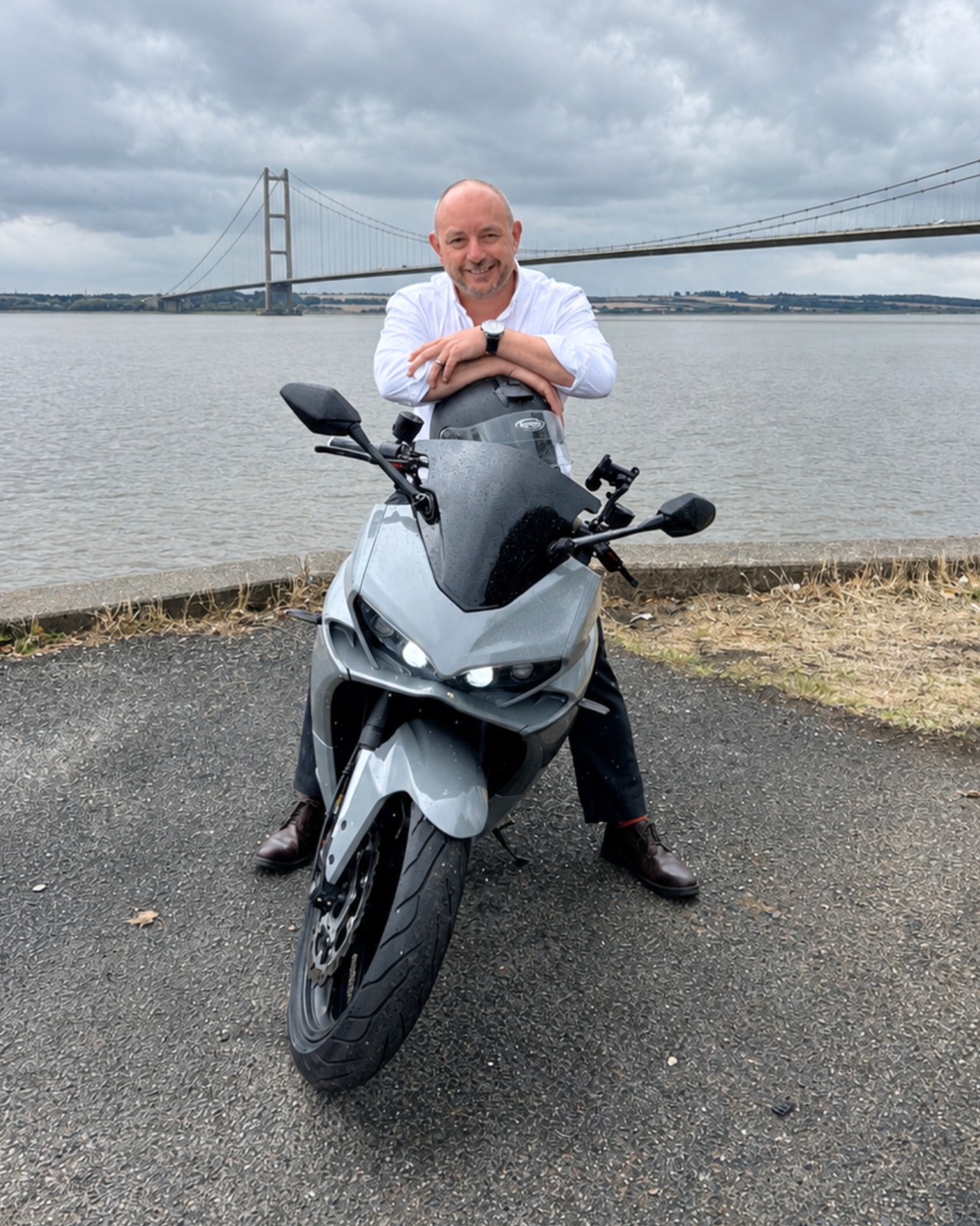
I didn’t set out to launch a motorcycle company. I wanted something for myself. Finding it was the problem. Building it became the adventure.
Photograph unavailable
01 / Before the business
It started with a fascination with machines.
Long before electric motorcycles, there were cars, engines and a family connection to Ford.
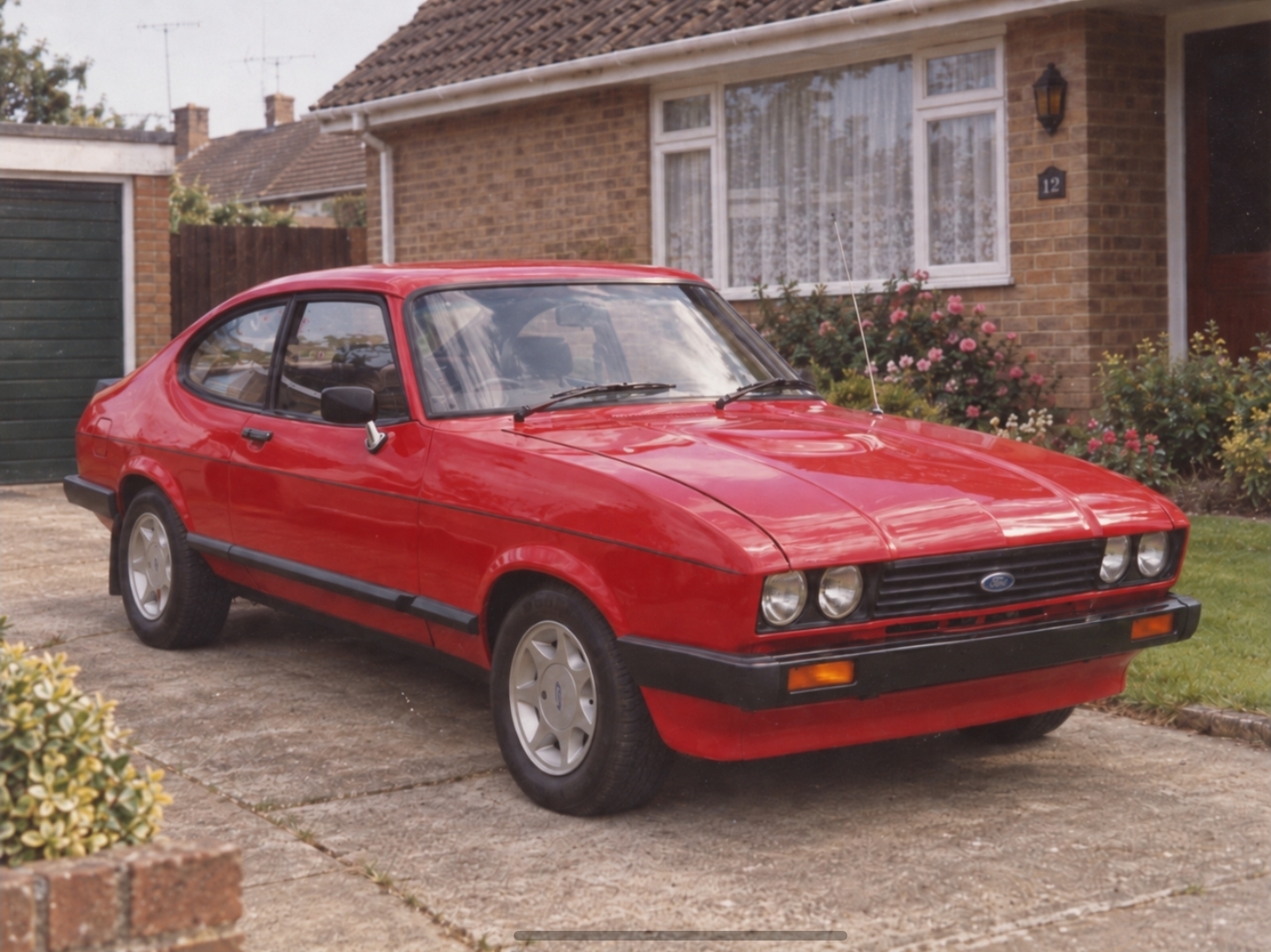
My grandfather spent his career at Ford. Helping with his Capri was part of what sparked my interest in engines and how things worked.
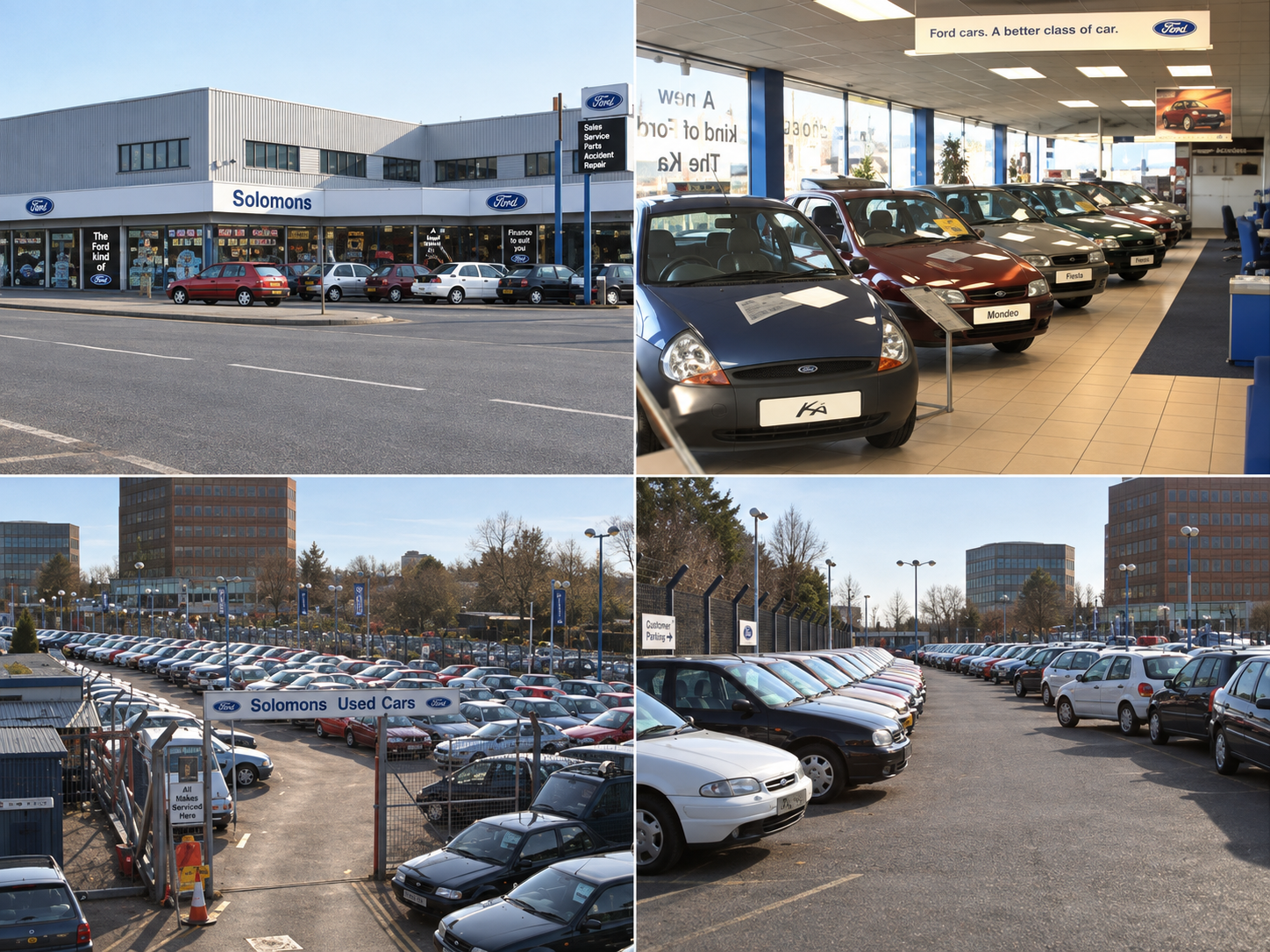
By fourteen, I had my first job in the motor industry, washing cars at Solomon’s Ford in Camberley after school and on Saturdays. Cars were what really caught my attention growing up, and they became the centre of my working life.
Motorcycles brought something different.
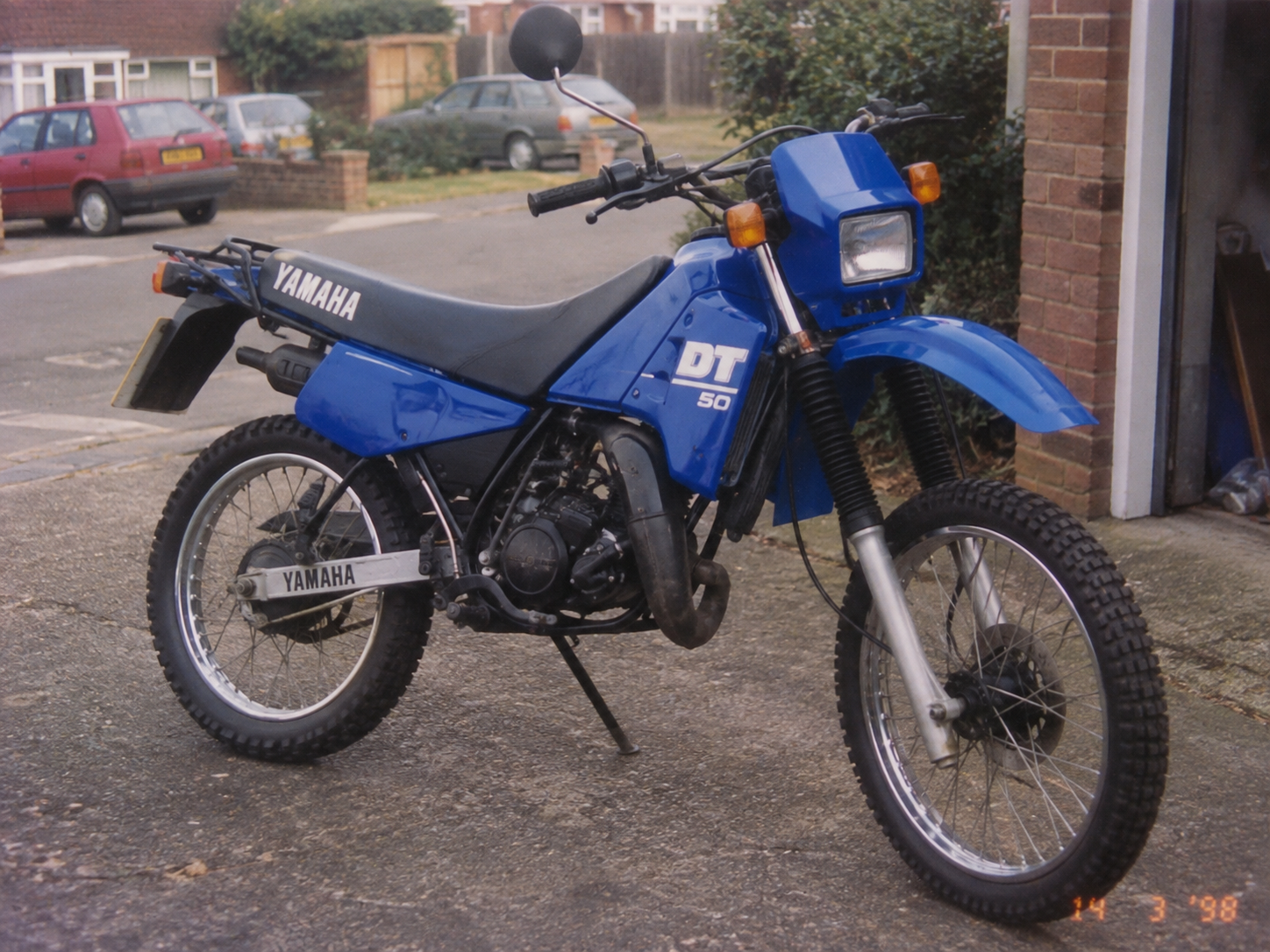
Dad and I collected my first bike: a 1988 Yamaha DT50. It was originally white. I later painted it blue with a spray can, which probably tells you something about my approach to leaving things alone.
That bike was my first real taste of freedom and feeling grown up. Just me, the machine and the road. Decades later, when I was asked what motorcycle I would buy with an unlimited budget, I still came back to the DT50.
Then life moved on. Work, family and responsibilities took priority. Motorcycling became something I had done, rather than something I was doing. But the feeling never really left.
Understanding more than the business around the vehicle
Starting at Ford gave me a practical introduction to the motor industry. Over more than two decades, that developed into senior group management and, eventually, working directly with Stellantis electric propulsion systems.
But my interest was never limited to managing the business around a vehicle. I wanted to understand the vehicle itself.
Alongside my industry experience, I pursued applied study and private academic mentorship in electrical engineering, software architecture, chassis dynamics and thermodynamics. Those subjects became increasingly relevant as the idea for Avenrà developed: how the powertrain behaves, how the software controls it, how heat is managed and how the whole motorcycle responds underneath a rider.
That gave me the technical grounding to be involved in the detail, rather than simply write a brief and wait for someone else to deliver it. It also helped me recognise where specialist experience was essential. Understanding how the systems connect is one thing. Building a company capable of developing, manufacturing, testing and supporting them takes a team.
Photograph unavailable
Photograph unavailable
Photograph unavailable
02 / A motorcycle for myself
Eventually, I decided to do something for me.
Several years ago, I went through a divorce. It was a major change in my life, and it made me stop and think about what I wanted from the next part of it.
After years spent working, raising a family and concentrating on other people, I wanted to make room for something that was simply for me. A motorcycle seemed a fairly reasonable answer.
I started looking at the sort of sportsbike I had always liked. Something around the 600cc mark, with the presence and performance I remembered admiring when the children were younger.
But my experience of vehicles had changed. Through my work around Peugeot, Citroën and Vauxhall, I had spent years immersed in electric propulsion. I had become used to what it could do.
I hadn’t always been enthusiastic about electric vehicles. Experiencing them, and understanding the engineering, changed that. What won me over was the response, the simplicity and the technology itself.
I still appreciated petrol engines. That hadn’t disappeared. But returning to one on a motorcycle felt strangely like stepping backwards, even when the bike itself was modern and technically sophisticated.
Surely there was an electric alternative that would give me the same excitement?
There were electric motorcycles, of course. What I struggled to find was the right combination: traditional sportsbike styling, genuinely exciting performance, straightforward riding and a price I could justify.
The machines that really interested me seemed to require £30,000 or £40,000. For someone returning to two wheels after a long absence, that was a substantial commitment.
Eventually, the question changed. Instead of asking where I could buy the bike, I started asking what it would take to make it.
The point where everything changed
“If there isn’t one,
Paul Cummins / Charging Stack
let’s make one.”
03 / Making it real
One problem at a time, it became a company.
My automotive background gave me a starting point, but it didn’t mean I knew everything about building motorcycles.
I understood electric powertrains and the motor industry. I also understood that I needed people with proper two-wheel expertise around me. So I started looking for them.
A surprising amount of that early work involved LinkedIn. Finding someone who could introduce me to someone else, then working towards the manufacturers and specialists behind battery packs, motors, controllers and the approvals we would need.
There was a point when the ambition was to develop virtually everything ourselves. The battery, the motor, the controllers. It was an exciting idea, but developing every component from scratch would have made the motorcycle far more expensive and risked being overtaken by the technology we were trying to create.
The real task was bringing the right expertise and components together into the motorcycle I wanted to ride. Making something good mattered more than claiming we had invented every part of it.
“I think I kind of got a little bit carried away.”
Paul Cummins / Charging Stack
There wasn’t one dramatic moment when a personal project suddenly became a motorcycle brand. We would solve a problem, discover the next one, and work through that as well.
The scale grew with each decision. Looking back, deliberately setting out to create a manufacturer from nothing might have made me think twice. Especially with my house and inheritance at stake.
But I hadn’t arrived at the whole challenge in one go. I had arrived at it gradually, through a series of problems that each felt possible to solve.
Somewhere along the way, I stopped building a bike for myself and started building a business that could put other people on one too.
The people behind the hardware
As the project grew, the relationships behind the components became as important as the components themselves.
Jay Dong, our Procurement & Manufacturing Partnerships Manager, is our link to the manufacturers behind the chassis, battery packs, motors, wiring looms and other components that make up an Avenrà motorcycle. His experience in automotive EV powertrains and components, combined with those manufacturer relationships, helps connect what we need with the people who can supply it.
For me, that has been an important part of making the idea real. Knowing what you want to build is one thing. Finding the right people to help you bring it together is another.
04 / The feeling had to stay
New technology. A very familiar reason to ride.
When I pictured the customer, I pictured someone rather like me. Someone who had spent years building a career and raising a family. Someone who remembered the bikes they had wanted ten or fifteen years earlier but had never quite found the right time to own.
That is why the styling was deliberate. I loved the sportsbikes of the late 1990s and 2000s. I wanted that sense of occasion, not a machine that looked unfamiliar simply to announce that it was electric.
The same thinking went into how it should feel. We arranged the battery and other major components with familiar sportsbike balance in mind.
The L-shaped battery pack, controllers and charging hardware weren’t simply things to hide wherever they would fit. Their positioning was part of the riding experience. I wanted someone used to a conventional sportsbike to get on and feel at home.
When riders came back from early test rides saying it felt like a bike, that was a real compliment. It meant the technology wasn’t getting in the way of the thing they had come to enjoy.
I also wanted to retain character. The sound the EVO makes under load was something I liked. Hearing the motor working was part of the experience, not automatically a flaw to engineer away.
A motorcycle is more than a collection of components. People become attached to them. They remember particular rides, particular machines and particular moments in their lives.
One of my favourite reactions came from two teenagers who admired the bike before discovering it was electric. That sort of unprompted response mattered. Nobody was trying to sell them anything.
The aim wasn’t simply to make something technically interesting. It was to make something people actually wanted.
05 / Different ways in
The motorcycle could grow with the rider.
The EVO was the starting point for the platform. It was the motorcycle closest to the one I had originally wanted. But not everyone needed that level of performance.
The ONE gave us another way to use the same underlying platform. A motorcycle for someone getting started, travelling to college or work, or riding around a city without paying for performance they didn’t need.
The visual appeal shouldn’t disappear just because someone wanted a more modest machine.
Accessibility also meant thinking about experience, not simply purchase price or the route into riding. My own son made that very real.
As a new rider, I wouldn’t have handed him a powerful conventional sportsbike and assumed that being able to operate it meant he was ready for everything it could do.
Electric control gave us a way to approach that differently. The idea behind digital tiering was that the motorcycle could develop with the rider. Start with a manageable level of performance, build experience and confidence, then reassess.
It wasn’t about treating every customer as inexperienced. An established rider and someone buying their first motorcycle should not necessarily receive the same setup.
It was about giving people useful choices, including the families helping them take that first step.
Making it yours also means how it looks: Craig Symington, our UK Paint Specialist, brings sixteen-plus years of paint and bodywork experience to Personality Colours, including finishes in a customer’s chosen OEM colour code.
06 / Why safety is personal
There are people waiting for us to come home.
There is another experience behind Avenrà that matters just as much as the engineering.
Years before the company existed, a friend died while on a motorcycle trip in Spain. He left behind a wife and a young daughter.
Hearing about a fatal accident is awful. Seeing what happens to the people left behind is something else entirely. You see the emotional impact, but also the practical and financial upheaval. An ordinary family’s life changes because someone went out riding and didn’t come home.
That stayed with me.
When we started developing our motorcycles, safety wasn’t simply another feature to add to the specification. I had seen what was at stake.
Working around cars had also exposed me to how much effort went into protecting their occupants. I wanted us to bring that same seriousness to people on two wheels, while recognising that motorcycling presents very different challenges.
That thinking sits behind our approach to airbag protection and the development of HALO. The ambition is to support the rider before something goes wrong, and to make useful information available quickly when it does.
The app-based work described in Charging Stack was an earlier stage of that wider vision: ride monitoring, location sharing, accident-history focus zones and emergency-contact notifications.
The more ambitious sensing, wearable integration and rider-assistance work was a development programme, not something every production bike already possessed.
Not a feature for a brochure.
A responsibility to the rider.
The wider HALO vision
The interviews describe a wider programme involving cameras, radar, rider assistance and body-worn technology. Ideas included recording where an impact occurred and making more useful information available after a collision.
The thinking also extended to responder consultation, collision records, consent and equipment that could adapt to different helmets. These details matter because a useful safety system has to fit real people and real situations.
Those future capabilities were ambitions under development, subject to engineering, validation and any necessary approvals or service arrangements. They should not be confused with the app-based notification functions described separately.
Sentinel: looking after the motorcycle too
Protecting the rider and protecting the motorcycle are different problems. Both were part of the ownership experience we were thinking about.
In JUSTRIDE, I discussed the Sentinel anti-theft concept, including tracking, marking, alarms, locking and a smoke deterrent. It was another example of thinking beyond the powertrain and asking what would help someone feel more confident owning the bike.
This is the development story, not a statement that every feature discussed in that interview is fitted to every motorcycle.
07 / A test I hadn’t planned
Then I experienced part of it myself.
On a wet Saturday, I went out to test updates to our tracking and emergency-notification software. I told my wife I would be out for half an hour or forty minutes.
I put on my helmet and airbag jacket. My protective trousers, unfortunately, were still at the office.
The testing went as expected. I was heading home when the rear of the development bike lost grip as I came off a roundabout, then regained it and threw me off.
This was not a deliberate crash test.
One of the first things I noticed was how tightly the jacket was fitting. The airbag had deployed before I reached the ground.
When I got back to the motorcycle, the emergency notification had already been sent. The system had detected the incident and allowed thirty seconds for me to cancel the alert. Because I had been thrown from the bike and hadn’t reached the screen, that window had elapsed.
It sent my wife my location, the recorded speed and detected forces, together with a link to further emergency information about the motorcycle.
The bike had suffered damage, mainly to exposed components and its finish. I was able to ride home, although I had injured my leg and knee. It was also an uncomfortable reminder that protective equipment left at the office cannot help you on the road.
What happened gave me a personal experience of the jacket and notification system in an unplanned incident. It wasn’t proof of every future HALO capability, but it was a very real encounter with the equipment we were already using.
08 / Beyond the sale
Building the bike was only part of the job.
My years in the motor industry were particularly useful when it came to what happened after someone bought a motorcycle.
I had worked around product and aftersales. That teaches you resilience, attention to detail and the importance of dealing with people properly. It also teaches you how much a vehicle can mean to its owner.
I knew how quickly that relationship could sour when something went wrong and nobody took responsibility.
Building something attractive is only part of the job. There also has to be a way to support it. That meant thinking about dealers, parts, servicing and repairs from the beginning, rather than treating them as problems to solve once enough motorcycles had been sold.
Mobile support was part of that approach. Where possible, the visit should fit around the customer’s life, whether the motorcycle was at home or at work.
Test rides followed the same principle. Bring the bike to someone and let them experience it, rather than expect them to make a decision entirely from photographs and specifications.
People do business with people
Chris Hunt, our General Manager, loves his bikes. He’s even got the beard for it.
He isn’t your typical corporate manager, and that is exactly what I want. Chris brings a genuine passion for motorcycling and a down-to-earth way of talking to people. Whether you’re buying your first bike or running a dealership, you’re having a conversation with someone who cares about it, not listening to a rehearsed pitch.
He’s also a family man with a strong sense of right and wrong. Old-school in the best sense: polite, straightforward and someone who takes his word seriously.
If you ask for something we can’t do, Chris will tell you. If something isn’t right, he’ll be open about it. His enthusiasm for what we’re building doesn’t mean promising the world and worrying about how to deliver it afterwards. He would rather give you an honest answer than an easy one.
That matters to me. People are trusting us with their money, their time and, in the case of our dealer partners, their own reputation. Chris believes people do business with people. His word is something he expects to stand behind.
He supports me in looking after our dealer network and wider partnerships, including Flamingo Land, as well as organising test rides and introducing people to the motorcycles. He brings the same approach to all of it: be yourself, treat people properly and be clear about what you can deliver.
During the Charging Stack interview, I was sitting in the van while Chris was outside showing the EVO to riders at a motorcycle café. That probably tells you more about him than a formal biography ever could. Out with the bikes, talking to people, sharing the enthusiasm.
That is exactly the sort of person I want representing Avenrà.
The sale was never going to be the end of our responsibility.
The less glamorous decisions that mattered
Meet the customer where they already are
Premium car dealerships were a deliberate part of the early approach. Someone already interested in an electric car might be open to an electric motorcycle without ever walking into a traditional bike dealership.
The same thinking led to conversations around gyms, hotels and golf clubs. The aim was to reach people who might love riding, even if they didn’t yet see themselves as motorcycle customers.
Make the business work behind the scenes
Shared stock and understanding future used values were part of the work too. So were supplier decisions: in JUSTRIDE, I described how HEL became a braking supplier after the initial route with Brembo stalled.
These weren’t all glamorous parts of the project. But they helped turn an interesting motorcycle into something people could live with, supported by a business they could contact.
09 / Making ownership work
People’s lives change. Ownership should recognise that.
The original question hadn’t simply been whether I liked motorcycles. It had been whether buying one made sense for me. That helped shape the thinking behind Avenrà Current.
Someone might love riding but not want to commit all their savings to a motorcycle. They might want to try it for a year before deciding whether it belongs in their life for the longer term.
The model I described in the interview was designed around that flexibility: defined opportunities to return the bike, the option to keep riding, and a purchase calculation that recognised the money already paid.
I wanted servicing and maintenance to be considered as part of the experience, rather than a collection of surprises afterwards.
There was a longer-term benefit too. Motorcycles returning through the scheme could become used bikes with a known maintenance history, giving another customer a more affordable way into the brand.
The intention was to build a relationship that could work at more than one stage of someone’s life, not just at the point when they first ordered a new motorcycle.
This is the thinking behind the model, not an offer or a summary of contractual rights. For current availability, inclusions, payment arrangements and return or purchase conditions, explore Avenrà Current and the applicable agreement.
10 / One company, one identity
A bigger ambition meant a new name.
The company began under the Ampèra name. As we looked towards European markets, we encountered a naming problem associated with Opel’s existing use and trademark position.
We could have pursued different identities in different countries. That wasn’t the direction I wanted. I wanted one brand that people could recognise wherever they met it.
That led to Avenrà.
For me, the name carried the idea of what comes next. That was the association that mattered: a company looking forwards, without forgetting what people already loved about riding.
Giving the company an identity
Building a motorcycle and building a brand are different jobs. Once other people started seeing what we were creating, the way we presented it mattered too.
Georgia Thompson, our Brand & Marketing Manager, brings together the creative and practical sides of that work. Her Bachelor’s degree in Fashion, Branding and Manufacture is supported by credentials in Digital Marketing and Photography.
That combination spans the journey from an initial concept and the way the brand looks to the photography, artwork and digital campaigns through which people encounter it. Georgia helps make sure there is a recognisable Avenrà identity across those different places. The motorcycle, the imagery and the way we communicate should feel as though they belong to the same company, wherever someone meets us.
France became the first practical focus for European expansion, with wider ambitions beyond it. The conversations were another sign that an idea which had started with one person could make sense to people much further away.
But expanding wasn’t simply a matter of shipping motorcycles somewhere new. The support network had to go with them. The same expectations around people, parts and aftersales needed to hold wherever we operated.
Craig Taylor brings more than forty years of international transport experience to our global logistics, handling the freight and customs work behind getting components and motorcycles where they need to be.
11 / More than one person’s idea
Building the company created other possibilities.
Avenrà started with something I wanted for myself. It could only become a company through the people who joined the work: specialists, suppliers, colleagues, dealers and riders.
That is part of the difference between having an idea and building a business. It stops being just yours.
The engineering, testing, manufacturing, paintwork, brand, logistics, dealer relationships and partnerships all have people behind them. Each brings a different kind of expertise to something the company needs. Their work is part of this story, not a footnote to it.
We had also built a substantial amount of software to make the operation work. The bike software, website, dealer systems, customer journeys and HALO development were connected parts of the same project.
Eventually, I looked at what we had created and realised some of it could solve problems elsewhere in the motor industry.
That was the thinking behind the automotive-software venture discussed in Charging Stack as iMotive. Buying a used vehicle can involve uncertainty about both the vehicle and the business selling it. The idea was to bring more of that information together, alongside dealership tools developed from what we had learned building our own systems.
It wasn’t the original reason for starting Avenrà. It grew out of work we had already needed to do.
The motorcycle development also continued to suggest new possibilities: different levels of performance, greater range and machines beyond the original platform’s intended role.
Record attempts were another ambition. So were new prototypes and the chance to find out how far we could take the ideas behind the first motorcycles.
Those possibilities mattered, but they were plans to develop and test, not achievements to announce before the work had been done.
The iMotive idea, in a little more detail
The ambition was to bring vehicle-provenance information and information about the selling business into the same customer journey, drawing on sources such as Experian and Companies House.
I also described dealership-management tools built from the technology behind our own operation. The thread connecting it all was the same: practical experience of the motor industry, used to improve how it works for people.
This describes the venture as it was discussed in the interview. It does not present a company-data check as a guarantee of a dealer’s future financial position.
12 / Back to the beginning
Underneath it all, I still want to go for a ride.
Ask me about a favourite ride and I come back to heading towards Scarborough. After all the work on components, software, approvals, dealers and ownership models, the original reason for doing this hasn’t changed very much.
I wanted a motorcycle that excited me. Something that gave me the experience I remembered enjoying, with the benefits of the technology I had come to appreciate.
What changed was realising that other people wanted it too.
Avenrà became bigger than the bike I had initially gone looking for. It became a responsibility to the people who would ride it, the people who would support it and the people waiting for those riders to come home.
But the starting point was simple.
I wanted a bike. I couldn’t find the one I wanted. So we started building it.

Photograph unavailable
The conversations behind the story
Two interviews.
The whole picture.
Different questions bring out different memories. These conversations with Charging Stack and JUSTRIDE form the foundation of this story, alongside my introductions to the people helping build Avenrà.

The idea, the build
and the human side.
The personal turning point, engineering decisions, the unplanned crash and why the company extends beyond the motorcycle.
Watch the full conversation
The first bike.
The bigger philosophy.
The DT50, the early influences and the thinking behind the technology, customer experience and company around the bike.
Watch the full conversationThis story brings together Paul’s recollections from both interviews with team background and contributions supplied by Paul. Product specifications, ownership arrangements and development plans in the recordings reflect the time of recording. Refer to the current model and service information before making a purchase decision.
Your next chapter
Some things make more sense from the saddle.
Read the story. Meet the motorcycle. Then see how it feels for yourself.